
Ask for a price on copper cathode and you will usually be quoted "LME Grade A, 99.99%". It sounds like a single, settled product. In practice that phrase is doing at least three separate jobs — describing a chemistry, describing a brand status, and implying a delivery basis — and confusing them is one of the more expensive mistakes a first-time cathode buyer can make. This explainer unpacks each layer in plain language, then sets out what to actually verify before a cargo moves. For the range Arian Holding supplies, see our Non-Ferrous Metals catalogue.
Layer one: the chemistry
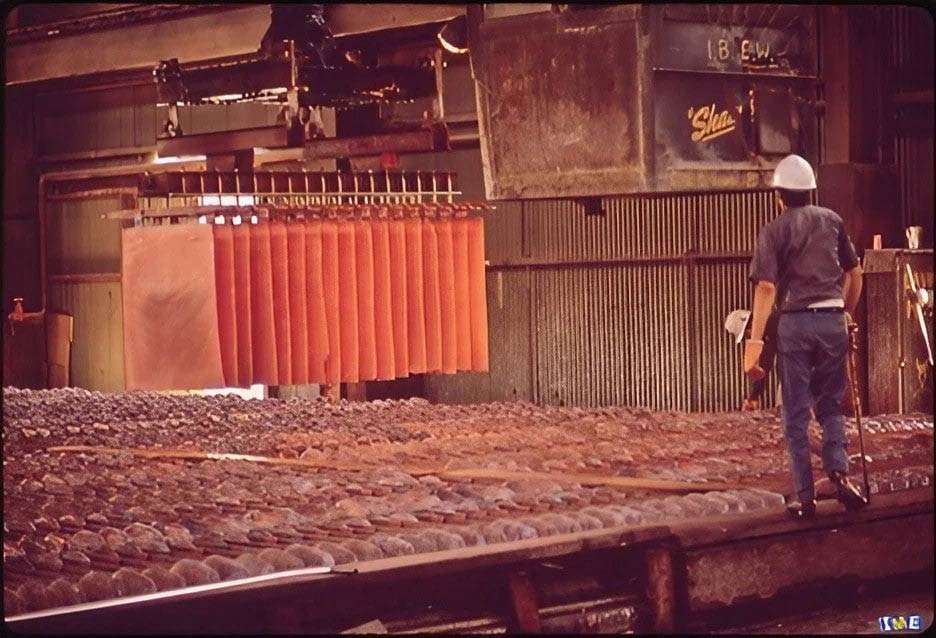
Cathode is the sheet of near-pure copper that comes out of an electrolytic refinery. Its quality is governed in Europe by BS EN 1978, which defines two grades: Cu-CATH-1 and Cu-CATH-2. Cu-CATH-1 is the high-purity grade — a minimum copper content of 99.9935% and a conductivity of about 101% IACS. In North America the closest equivalent designation is ASTM B115.
What makes Cu-CATH-1 demanding is not the headline purity figure but the individual caps beneath it. The standard limits specific elements to the low parts-per-million — silver at 0.0025%, iron and sulphur around 0.0010–0.0015%, arsenic and lead at 0.0005%, bismuth, selenium and tellurium at 0.0002%. It then adds group limits on top, so that arsenic, cadmium, chromium, manganese, phosphorus and antimony together must stay under 0.0015%, and bismuth, selenium and tellurium together under 0.0003%.
Why the group limits matter. A cathode can pass every individual impurity test and still fail the group total. Elements like bismuth and selenium embrittle copper during hot working, so a rod mill cares far more about the combined figure than about any single line on the certificate. If your contract only names a purity percentage, you have not specified the thing that will actually determine whether the metal draws.
Layer two: the brand
Here is where language diverges from chemistry. "LME Grade A" is not only a specification — it is a brand listing. A producer applies to the London Metal Exchange, demonstrates that its output meets the contract specification consistently, and the exchange lists that brand as deliverable against the copper contract. Metal from a listed brand can be placed on warrant in an LME warehouse; metal from an unlisted brand cannot, however good it is.
Two cathodes with identical assay certificates can be worth meaningfully different amounts, because only one of them can be turned into an exchange warrant.
Listings are live, not permanent. In August 2026 the LME issued a notice delisting the copper Grade A brand FHG, with the last day for warranting set at 3 November 2026. Any buyer holding a long-dated contract written against "any LME-registered brand" needs to track those notices, not assume the list is static.
Traceability rules are tightening as well. Under the exchange's physical markets reform, all newly produced copper intended for warranting will need an enhanced electronic certificate of analysis created through LMEpassport from 1 January 2028, and from 1 January 2030 all LME-listed copper intended for warranting will need an indelible production-cast-reference marking on the metal itself — labels alone will no longer be enough. That is a supply-chain documentation change worth building into procurement systems early rather than late.
Layer three: EQ and off-grade
EQ — equivalent grade — is cathode that meets or approaches Grade A chemistry but comes from a brand the LME has not listed. It is real, usable metal that a great many consumers buy deliberately; it simply is not exchange-deliverable, so it trades at a discount. Chinese smelters have been pushing for more EQ listings through 2026, which over time changes the size of that discount pool.
Off-grade is a different animal: cathode carrying elevated residuals such as lead or sulphur, outside the Cu-CATH-1 envelope. Market reporting through 2026 has put typical off-spec material at a discount in the region of US$20–50 per tonne below the LME reference, while very high-purity cathode required for fine wire rod can command a premium of roughly US$10–30 over standard Grade A. Those are indicative ranges, not quotations — but they show the shape of the market.
Reading a cathode offer: the grade ladder
| Designation | What it really says | Exchange deliverable | Typical use |
|---|---|---|---|
| Cu-CATH-1 / LME Grade A (listed brand) | Min 99.9935% Cu, individual and group impurity caps per EN 1978; brand formally listed by the LME | Yes | Fine wire rod, high-conductivity applications, financing and hedging |
| EQ (equivalent grade) | Meets or approaches Grade A chemistry; brand not LME-listed | No | Physical consumption where deliverability is not required |
| Cu-CATH-2 | Commercial cathode grade under EN 1978 with looser impurity limits | No | General melting and alloying where trace limits are less critical |
| Off-grade / off-spec | Elevated residuals (e.g. Pb, S) outside Cu-CATH-1 limits | No | Discounted feed for tolerant applications and re-refining |
Price: the LME reference plus a premium
Cathode is almost never priced as a flat number. It is priced as the LME reference for a stated quotational period, plus a physical premium for a stated delivery basis. The premium is where the logistics live: freight, warehousing and circulation costs, regional supply and demand, and the market's preference for particular brands. That is why premium assessments are published per destination — Shanghai Metals Market, for instance, launched a Grade A cathode premium assessment on a CIF Rotterdam basis in February 2026 precisely because a single global number does not describe the physical market.
The practical consequence for a buyer is that comparing two offers means comparing four things, not one: the grade, the brand, the quotational period, and the premium basis. An offer that looks cheaper on premium may simply be quoted ex-warehouse against a delivered rival. Our Supply Chain & Logistics team normalises those bases before we put a comparison in front of a client.
What to verify before the cargo moves
Cathode disputes rarely turn on exotic metallurgy. They turn on documentation and on who was allowed to look at the metal. A workable checklist:
| Check | What good looks like |
|---|---|
| Standard named in the contract | "BS EN 1978 Cu-CATH-1" or "ASTM B115", not just "99.99% Cu" |
| Brand and listing status | Named producer brand, confirmed against the current LME listed-brands list — and checked against recent delisting notices |
| Certificate of analysis | Producer CoA tied to the production cast, with individual and group impurity figures shown |
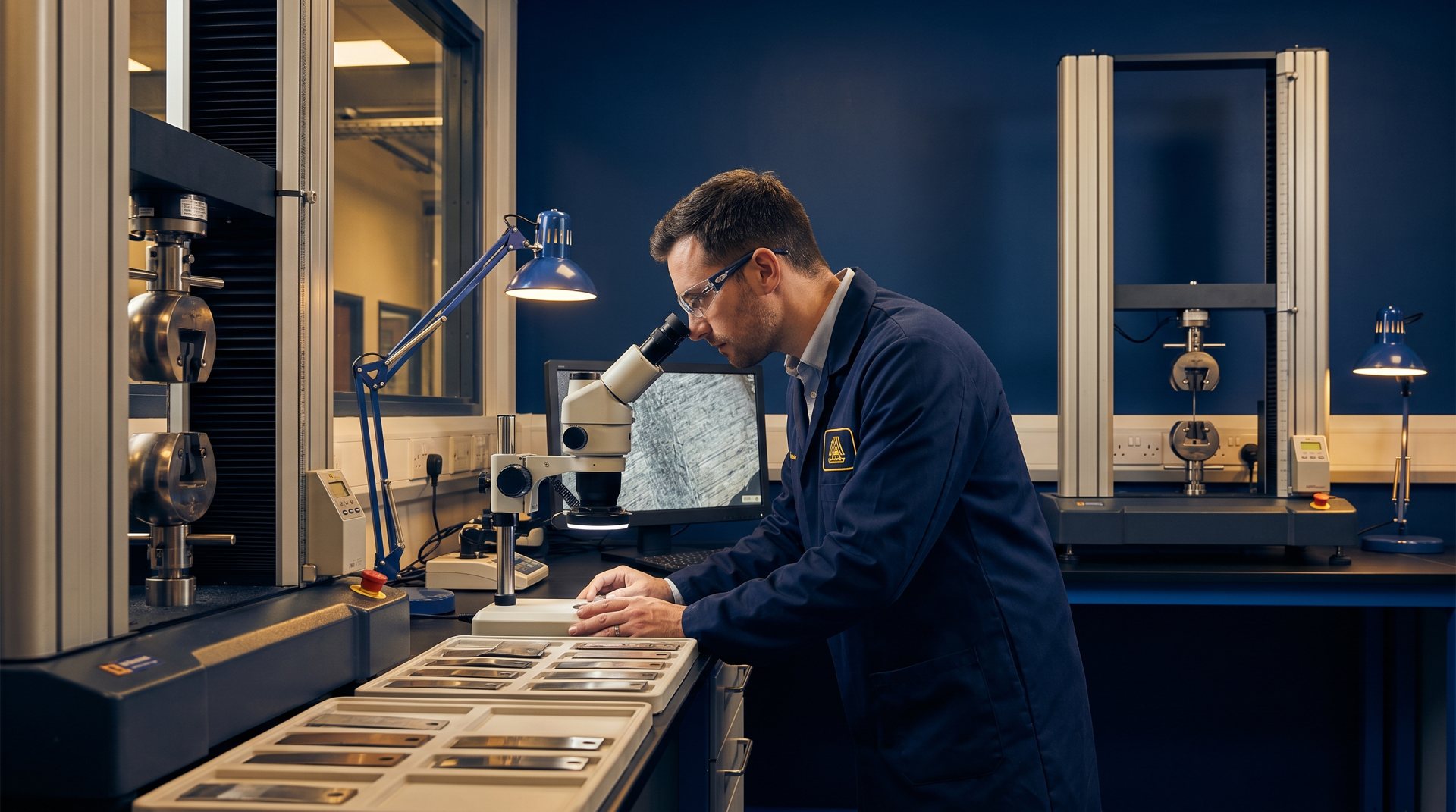
| Independent inspection | Identification, weight, physical condition, packing, marking, plus sampling or witnessed laboratory analysis — contracted separately from the producer CoA |
| Bundle and weight terms | Bundle weights and tolerance agreed in writing; note that an LME copper warrant is for 25 tonnes with a ±2% tolerance |
| Physical condition | Corrosion, nodules and moisture on sheets are a real rejection risk, and are what an inspector is there to catch |
The same discipline is what we apply across the wider non-ferrous book — cathodes, ingots, billets and wire rod — and it mirrors the mill-certificate approach we take on steel products and semi-finished steel, all part of our Industrial Products & Commodities sector. Certification, sampling and pre-shipment inspection are handled by our quality assurance function, working alongside global sourcing to keep brand-level substitution transparent rather than silent.
Frequently asked questions
What does LME Grade A copper cathode actually mean?
It means two things at once. First, the metal meets the chemical specification the London Metal Exchange adopts for its copper contract, which follows BS EN 1978 Cu-CATH-1 with a minimum copper content of 99.9935% and tight caps on individual impurities. Second, and just as important commercially, the metal carries a producer brand that the LME has formally listed as Grade A. Material that meets the chemistry but comes from an unlisted brand is not LME Grade A in the deliverable sense, and it will not price like it.
What is the difference between Cu-CATH-1 and Cu-CATH-2?
BS EN 1978 defines two cathode grades. Cu-CATH-1 is the high-purity grade used for the LME contract and for demanding downstream work such as fine wire rod, with individual impurity limits in the parts-per-million range and a conductivity around 101% IACS. Cu-CATH-2 is a commercial grade with looser limits. Both are copper cathode, but they are not interchangeable in a contract, and a buyer who writes only "cathode 99.99%" into a purchase order has not specified enough.
What is EQ copper and how does it differ from Grade A?
EQ stands for equivalent grade. It describes cathode that meets or approaches Grade A chemistry but comes from a brand not listed by the LME, so it cannot be warranted against the exchange contract. EQ material is a genuine part of the physical market and is often perfectly fit for purpose, but because it lacks exchange deliverability it usually trades at a discount to listed Grade A brands. Buyers should decide deliberately whether exchange deliverability matters to them or whether they are simply buying metal to consume.
Why do cathode premiums vary so much between regions?
The LME price is a reference for the metal itself. The premium on top of it pays for everything else: getting the cathode to a specific delivery point, the freight and warehousing behind it, the local balance of supply and demand, and the market's preference for particular brands. Because those factors are regional, the same tonne of Grade A cathode can carry a materially different premium delivered to Rotterdam than delivered to an Asian port, even on the same day.
Does a producer certificate of analysis replace independent inspection?
No, not if the contract calls for independent sampling. A producer certificate of analysis records what the smelter found on its own production cast. Independent inspection is a separate control covering identification, weight, physical condition, packing, marking and sampling or witnessing of the laboratory analysis. The two serve different purposes, and on cargoes of any size it is normal to have both.
Working with Arian Holding
Copper is a market where the specification, the brand and the delivery basis all move independently, and where the difference between a good purchase and a poor one is usually settled in the contract wording rather than at the port. Arian Holding trades cathodes, ingots, billets and wire rod alongside the wider non-ferrous, industrial minerals and polymer ranges, with certification and inspection built into the offer rather than bolted on afterwards. Tell us the grade, the destination and the pricing basis you need and our trade desk will come back with a specification-matched offer. Request a quote to start.
Sources: London Metal Exchange — Special Contract Rules for Copper Grade A, Listing of Copper Grade-A Brands, Brands notice 26/196 (FHG delisting) and the 2026 physical markets consultation decision notice; BS EN 1978:2022 (copper cathode Cu-CATH-1 / Cu-CATH-2); ASTM B115; Shanghai Metals Market (Grade A cathode premium, CIF Rotterdam); Fastmarkets premium assessment specifications; The Metalnomist (EQ listings, June 2026). Impurity limits are quoted from published standards for general guidance only; premium and discount ranges are indicative market observations around August 29, 2026 and are not an offer, a quotation or trading advice. Always contract against the current published standard and the LME's current listed-brands list.