
Steel is the most heavily standardised material most buyers will ever purchase, and that is precisely why grade designations confuse people. A single delivery can carry a European designation, an American equivalent, a Chinese national grade and a customer specification that matches none of them exactly. This explainer breaks down what those codes mean, where the common equivalences break down, and what to check before a shipment is accepted. It is an evergreen reference rather than a market call — for current direction see our regular market reports on the Insights hub.
What a steel grade actually tells you
A grade is a shorthand for a package of guarantees, not a description of chemistry alone. In practice it bundles four things: a minimum or characteristic strength, a ductility requirement, a chemical composition envelope, and a test and certification regime that proves the first three. Two mills can produce steel with near-identical chemistry and only one of them can legitimately sell it as a given grade, because the grade is defined by the standard it was tested and certified against.
That distinction matters commercially. When a substitution is proposed — and on long-lead projects it frequently is — the question is never simply "is the chemistry the same?" but "does the alternative standard guarantee everything the specified standard guaranteed?" Our quality assurance team treats that as a documentation exercise, not a judgement call.
Reading rebar grades: the number and the letter
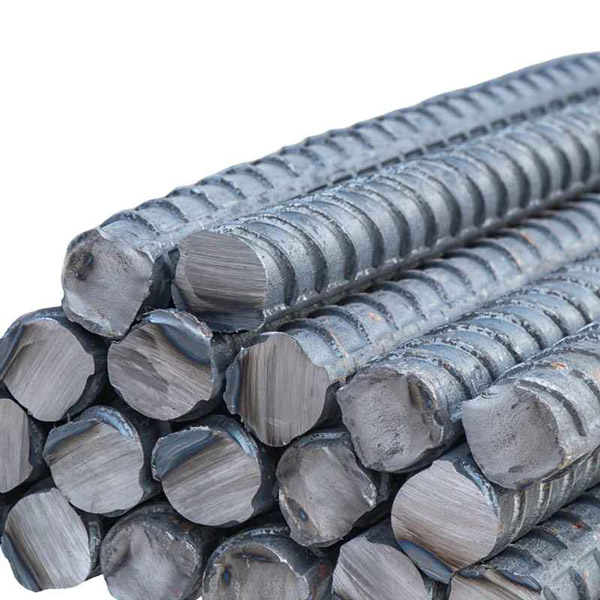
Reinforcing bar is where grade codes are most visible and most misread. Under BS 4449 and its European equivalents, a designation such as B500B decomposes cleanly: B denotes steel for concrete reinforcement, 500 is the characteristic yield strength in megapascals, and the trailing letter is the ductility class. Chemistry across B500A, B500B and B500C is broadly similar; what separates them is elongation at failure and the ratio of tensile strength to yield strength. B500B is the common general-purpose class, while B500C — the most ductile — is what seismic and high-demand structural design typically calls for.
The American system uses a different unit and therefore different numbers. ASTM A615 covers deformed and plain carbon-steel bars, with Grade 40, Grade 60 and Grade 75 expressed in thousands of pounds per square inch of minimum yield. Grade 60 — roughly 420 MPa — is the workhorse of North American construction, and it is emphatically not a like-for-like replacement for a 500 MPa European grade despite being loosely described as such in trading conversation.
Flat products, sections and semi-finished steel
Away from rebar, grade families follow different logics. Structural sections and plate are commonly specified to EN 10025 designations such as S235, S275 and S355, where the number is again yield strength in MPa and the suffixes describe impact toughness and the temperature at which it was verified — a detail that matters for anything welded or operating in cold conditions. Hot rolled coil for forming and tube-making is usually specified by a combination of grade, thickness tolerance class and surface condition, because a technically compliant coil with the wrong tolerance class is still unusable on a customer's line.
Semi-finished steel — billet, bloom and slab — is graded chiefly for what it will become. Billet destined for rebar rolling is specified by carbon and manganese ranges that let the re-roller hit the target grade, alongside internal-soundness requirements that never appear on a finished-product certificate. Buyers moving between finished and semi-finished purchasing should treat them as separate specification disciplines; see our Steel Products and Semi-Finished Steel catalogues, both part of the Industrial Products & Commodities sector.

Carbon equivalent: the number fabricators care about
If a fabricator asks a single question about a certificate, it is usually about carbon equivalent (CE or CEV). The figure collapses carbon, manganese, chromium, molybdenum, vanadium, nickel and copper into one value that predicts how the steel will behave when welded. A higher carbon equivalent implies a greater tendency toward hard, crack-susceptible heat-affected zones, and therefore a stronger case for preheat, controlled heat input and post-weld procedures.
Two consignments of the same nominal grade can carry materially different carbon equivalents and both remain compliant, because the standard defines a range rather than a point. This is why serious fabrication specifications state a maximum CE independently of the grade — and why that ceiling must be written into the purchase order rather than assumed.
The certificate is part of the specification
Under EN 10204, certificate types are themselves standardised. A 2.1 is a declaration of compliance with no test results. A 2.2 adds test results, but from non-specific testing. A 3.1 reports actual test results for the material supplied, validated by the manufacturer's inspection representative, who must be independent of the production department — this is the level most projects specify. A 3.2 carries the same content countersigned by an independent third party, and is generally reserved for critical or regulated work.
The one check that catches most problems: reconcile the heat or cast number on the certificate against the number rolled, stencilled or tagged on the material itself. A complete, professional-looking certificate that cannot be tied to the delivered bundles evidences nothing. This reconciliation sits at the centre of our inspection protocol and is documented before release from origin.
Definitions at a glance
| Term | What it means | Where it bites |
|---|---|---|
| Yield strength | The stress at which the steel begins to deform permanently rather than elastically | The headline number in almost every grade code (B500, S355, Grade 60) |
| Ductility class | How far the steel stretches before failure, and its tensile-to-yield ratio | The trailing letter in B500A / B500B / B500C; decisive for seismic design |
| Carbon equivalent (CEV) | Alloying elements expressed as a single weldability index | Preheat requirements and weld cracking risk in fabrication |
| Heat / cast number | The identifier of the specific melt the material came from | The link between a certificate and physical stock — the core traceability check |
| EN 10204 3.1 | Inspection certificate with specific test results, mill-validated | The default certification level on most project specifications |
| Tolerance class | Permitted deviation in thickness, width, length or section | Coil and section usability on automated lines, and delivered weight accuracy |
How this changes a purchase order
A specification that names only a grade is incomplete. A workable order also fixes the governing standard and its edition, the certificate type, the maximum carbon equivalent where welding is involved, the tolerance class, and the marking convention that will allow traceability at the receiving yard. Getting those six lines right at enquiry stage removes most of the disputes that otherwise surface at discharge.
The same discipline extends beyond ferrous. Grade, purity and certification logic apply equally to the cathodes, ingots and billets in our Non-Ferrous Metals range and to the certified quarry products in Industrial Minerals, where lab certification plays the role a mill certificate plays in steel. Arian Holding's global sourcing team specifies against the standard and the certificate together, and our supply chain and logistics function carries that documentation through to delivery.
Frequently asked questions
Is B500B the same as ASTM A615 Grade 60?
They are close but not identical. B500B to BS 4449 specifies a characteristic yield of 500 MPa, while ASTM A615 Grade 60 specifies a minimum yield of 60,000 psi, roughly 420 MPa. The standards also differ in how ductility, rib geometry and testing are defined, so one is not automatically an approved substitute for the other. Always have the substitution confirmed by the project engineer in writing.
What do the letters A, B and C mean in B500A, B500B and B500C?
The number is the characteristic yield strength in MPa and the final letter is the ductility class. Chemistry is broadly similar across the three; what changes is elongation and the ratio of tensile to yield strength. B500A is the least ductile, B500B is the common general-purpose class, and B500C offers the highest ductility and is typically specified for seismic or high-demand structures.
What is carbon equivalent and why does it appear on the certificate?
Carbon equivalent (CE or CEV) converts the alloying elements in the steel into a single number that indicates how the material will behave when welded. A higher carbon equivalent generally means a greater risk of hard, crack-prone weld zones and a stronger case for preheating or controlled welding procedures. Fabricators normally set a maximum CE in the purchase specification, so the figure on the mill certificate must be checked against it.
What is the difference between an EN 10204 3.1 and a 3.2 certificate?
A 3.1 certificate reports actual test results for the material supplied and is validated by the manufacturer's own inspection representative, who must be independent of production. A 3.2 certificate covers the same results but is countersigned by an independent third party such as the buyer's inspector or a nominated inspection body. Most projects specify 3.1; 3.2 is usually reserved for critical or regulated applications.
How do I confirm a mill certificate belongs to the steel that was delivered?
Match the heat or cast number. Every certificate is issued against a heat number, and that same number should appear on the bundle tag, rolled mark or stencil on the material itself. If the heat numbers do not reconcile, the certificate does not evidence the delivered steel, regardless of how complete the document looks.
Sources and further reading: BS 4449:2005+A3:2016 reinforcement grade summaries via Heaton Manufacturing; ASTM A615 grade properties via CJM Steel Group; EN 10204 certificate types and heat-number traceability via Projectmaterials and South West Steel Supplies. This explainer is general information about standards and procurement practice, not engineering, certification or trading advice — project requirements must be confirmed with the responsible design engineer.