
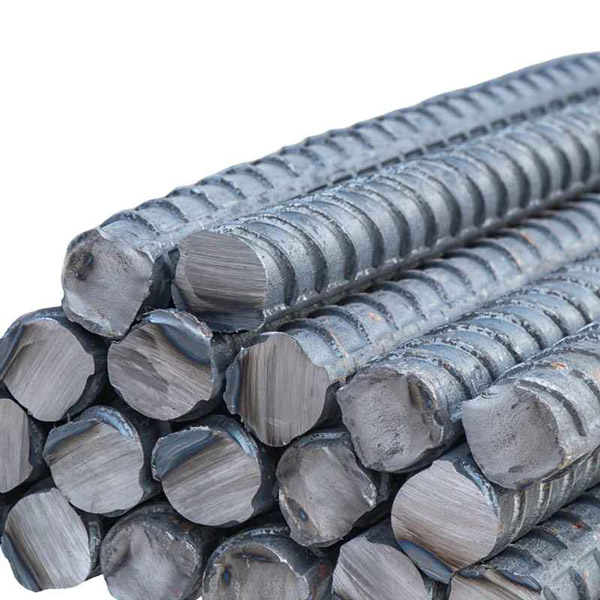
Reinforcing bar looks like the simplest thing a trading desk can buy. It is not. Two consignments can carry the same headline number — "Grade 60", "B500" — and behave completely differently in a welded splice or a seismic frame. Add negative weight tolerance, an unverifiable heat number and a carbon declaration your customs broker cannot use, and a competitive offer becomes an expensive problem on site.
This guide sets out how Arian Holding's trade desk specifies and inspects rebar for project buyers, and what you should insist on before releasing an order. Grades, sections and mill options are listed on our Steel Products catalogue, part of the Industrial Products & Commodities sector.
The short version
Name the governing standard and the ductility class, not just the strength grade. Demand a mill test certificate whose heat number matches the rolled mill mark on the bar. Fix the mass-per-metre tolerance contractually and verify it at load port. And if the cargo is EU-bound, secure verified embedded-emissions data from the mill at the time of order.
Step 1 — Fix the standard before you talk price
The first question is which specification governs, because the same nominal strength sits under very different guarantees. ASTM A615 is the general-purpose deformed carbon-steel specification, defining grades by minimum yield — Grade 60 at 420 MPa and Grade 75 at 520 MPa are the workhorses, with Grades 80 and 100 defined for higher-strength design. Critically, A615 makes no promise about weldability or ductility. ASTM A706 does: it is the low-alloy, weldable, seismic specification, controlling chemistry and carbon equivalent so bars can be welded, and requiring a tensile-to-yield ratio of at least 1.25 with elongation at maximum force of at least 14%.
In British and European practice, BS 4449:2005+A3:2016 takes a different approach: one strength level, 500 MPa, split into three ductility classes. All B500B and B500C bar is weldable with a carbon equivalent capped at 0.50%.
Step 2 — Match the ductility class to the structure
Ductility is where substitutions cause real damage. B500B requires elongation at maximum force (Agt) of at least 5.0% and a tensile-to-yield ratio of at least 1.08 — adequate for ordinary reinforced concrete. B500C raises that to at least 7.5% Agt with a ratio between 1.15 and 1.35, and is the class required for seismic design under EN 1998-1. A supplier offering B500A against a B500C specification is not offering a cheaper equivalent; it is offering a different material.
Step 3 — Compare the specifications side by side
| Standard / class | Characteristic yield | Ductility requirement | Weldable? | Typical use |
|---|---|---|---|---|
| ASTM A615 Gr 60 | 420 MPa | Not specified as a ductility class | Not guaranteed | General reinforced concrete |
| ASTM A615 Gr 75 / 80 | 520 / 550 MPa | Not specified as a ductility class | Not guaranteed | High-rise, heavy infrastructure |
| ASTM A706 Gr 60 | 420 MPa | Rm/Re ≥ 1.25; Agt ≥ 14% | Yes — controlled CE | Seismic frames, welded splices |
| BS 4449 B500B | 500 MPa | Agt ≥ 5.0%; Rm/Re ≥ 1.08 | Yes — CEV ≤ 0.50% | General RC to Eurocode 2 |
| BS 4449 B500C | 500 MPa | Agt ≥ 7.5%; Rm/Re 1.15–1.35 | Yes — CEV ≤ 0.50% | Seismic design to EN 1998-1 |
Where a project spans jurisdictions, agree one governing standard in the contract and treat everything else as an equivalence note requiring the engineer's written acceptance. Billet and bloom feedstock for re-rolling is covered separately on our Semi-Finished Steel page.
Step 4 — Read the mill test certificate properly
A mill test certificate is only worth what it can be traced to. It must state the producing mill, heat or cast number, governing standard and grade, diameter and length, full chemical analysis with the calculated carbon equivalent, and the mechanical results — yield, tensile, the tensile-to-yield ratio, elongation, Agt where required, and the bend or rebend result. Tensile testing normally follows ASTM A370; bend testing follows ASTM E290.
Then close the loop physically: rolled mill marks carry the producer, size and grade, and inspectors should verify those marks against the heat numbers on the certificates before the cargo is accepted. That reconciliation is standard practice in our quality assurance workflow, alongside independent third-party sampling where the client's engineer requires it.

Step 5 — Control tolerances and the weight basis
Rebar is usually invoiced on theoretical weight derived from nominal diameter, which makes negative mass deviation both a commercial leak and a structural one — under-weight bar delivers less steel area than the designer assumed. Standards cap mass-per-metre deviation, and the permitted band narrows as diameter increases. Three contractual points are worth insisting on: the applicable tolerance limit in writing, verification by a nominated inspector before loading, and clarity on whether settlement is on theoretical or actual weight. Also confirm rib geometry and bar marking, since bond performance and traceability both depend on them.
Step 6 — Plan for carbon compliance and origin
Carbon rules are now a procurement variable, not a policy footnote. The EU's Carbon Border Adjustment Mechanism entered its definitive period on 1 January 2026, and rebar sits squarely inside the covered iron and steel scope. Importers bringing more than 50 tonnes of in-scope goods into the EU annually must hold authorised CBAM declarant status and surrender certificates priced against the EU ETS, with the first annual declaration and surrender due by 30 September 2027. Verified embedded-emissions data has to come from the mill — so make it an order condition.
Regional demand for certified low-carbon material is running ahead of supply. Industry body AGSI has estimated that only around 15% of the UAE's long-product demand could currently be met with certified net-zero steel, which means buyers with green-building commitments should qualify mills early rather than assume availability. Our global sourcing team maintains approved-mill lists across Turkey, the GCC, South and East Asia precisely for this reason.
Step 7 — Get the freight and delivery sequence right
Rebar is bulky, low-value-density cargo, so freight and handling decide landed cost as much as mill price. Bundle weights, lifting arrangements, lashing, coil versus straight-length format, and whether cut-and-bend is done at origin or destination all change the number. Sequencing matters too: rebar delivered ahead of the pour schedule ties up working capital and risks surface corrosion in humid coastal storage. Phased call-off against a framework contract usually beats a single large shipment, and is the model our supply chain and logistics team structures most often.
Where the market sits in August 2026
The backdrop is two-speed. Chinese rebar futures fell below CNY 3,000 per tonne in early August, the weakest since June 2025, as mill margins deteriorated and the property downturn continued to weigh on Chinese construction demand. US scrap sentiment for August has been described as broadly balanced-to-soft, with buyers notably bearish, summer mill outages and weak exports capping activity. Regionally, though, demand is firm: GCC infrastructure programmes continue to pull volume, Saudi Arabia accounts for roughly 49% of GCC structural steel consumption, and UAE monthly rebar demand has been reported rising through the year. Cost indices have moved against buyers — reinforcement steel costs rose materially between Q4 2025 and Q2 2026 on published index data.
For buyers, that combination argues for locking specification and mill approval now, while keeping pricing flexible through phased call-off rather than committing a full programme at one number.
Frequently asked questions
What is the difference between ASTM A615 and ASTM A706 rebar?
ASTM A615 is the general-purpose specification for deformed carbon-steel reinforcing bar. It sets minimum yield and tensile strength by grade — commonly Grade 60 (420 MPa) and Grade 75 (520 MPa), with Grades 80 and 100 also defined — but it does not guarantee weldability or enhanced ductility. ASTM A706 is the low-alloy, weldable and seismic-grade specification: it controls chemistry and carbon equivalent so bars can be welded, and it demands higher ductility, with a tensile-to-yield ratio of at least 1.25 and elongation at maximum force of at least 14%. If your drawings call for welded splices or seismic detailing, A615 material is not an acceptable substitute for A706.
What do B500A, B500B and B500C mean in BS 4449?
BS 4449:2005+A3:2016 defines three classes of weldable reinforcing steel that all share a 500 MPa characteristic yield strength but differ in ductility. Class B requires elongation at maximum force of at least 5.0% and a tensile-to-yield ratio of at least 1.08. Class C is the high-ductility class, requiring at least 7.5% elongation at maximum force and a tensile-to-yield ratio between 1.15 and 1.35, and it is the class specified for seismic design under EN 1998-1. Class A is the lowest-ductility class and is generally restricted to non-critical applications. All B500B and B500C bars are weldable, with a carbon equivalent value capped at 0.50%.
What should a rebar mill test certificate contain?
A usable mill test certificate ties a specific heat number to specific test results. It should state the producing mill, the heat or cast number, the governing standard and grade, the bar diameter and length, and the measured chemical analysis including carbon, manganese, sulphur, phosphorus and the calculated carbon equivalent. On the mechanical side it should report yield strength, tensile strength, the tensile-to-yield ratio, elongation, elongation at maximum force where the standard requires it, and the result of the bend or rebend test. Tensile testing normally follows ASTM A370 and bend testing ASTM E290. Cross-check the heat number on the certificate against the rolled mill mark on the bars themselves — that mark carries producer, size and grade and is your only physical link back to the paperwork.
How much weight tolerance is acceptable on imported rebar?
Rebar is normally invoiced on theoretical weight calculated from nominal diameter, so any negative mass deviation is a direct commercial loss as well as a structural concern, because under-weight bar means less steel area than the designer assumed. Standards set explicit limits on mass per metre and these tighten as diameter increases, so small bars carry a wider permitted band than large ones. Specify the applicable tolerance in the contract, ask for it to be verified by a third-party inspector at load port, and check whether you are being invoiced on theoretical or actual weight — the two can differ materially over a full shipment.
Does CBAM affect rebar imports in 2026?
Yes, if the material is entering the European Union. The EU Carbon Border Adjustment Mechanism entered its definitive period on 1 January 2026 and rebar is a covered iron and steel product. Importers bringing more than 50 tonnes of in-scope goods into the EU per year must hold authorised CBAM declarant status, must obtain verified embedded-emissions data from the producing mill, and must surrender CBAM certificates priced against the EU ETS carbon price. The first annual carbon border declaration and certificate surrender deadline is 30 September 2027. Buyers shipping to the EU should make emissions reporting a contractual obligation on the mill, not an afterthought.
Working with Arian Holding
Our trade desk supplies reinforcing bar and semi-finished feedstock against ASTM, BS/EN and ISO specifications from approved mills, with mill certification, third-party inspection and phased delivery structured into the contract. Beyond long products, the same sourcing and QA framework covers non-ferrous metals, industrial minerals, petrochemicals and polymers. Send us your bar schedule, governing standard and delivery window and we will come back with mill options and firm pricing — request a quote.
Sources: Instron — ASTM A615 testing; BS 4449:2005 (published text); B500B vs B500C comparison; European Commission — start of the CBAM definitive period; Fastmarkets — UAE low-carbon steel demand (AGSI); Fastmarkets — US scrap trends outlook, August 2026; Trading Economics — steel rebar futures; MarkNtel Advisors — GCC structural steel market. This guide is general technical and commercial information, not engineering, compliance or trading advice; always specify against the project's governing standard and the engineer's written requirements.