
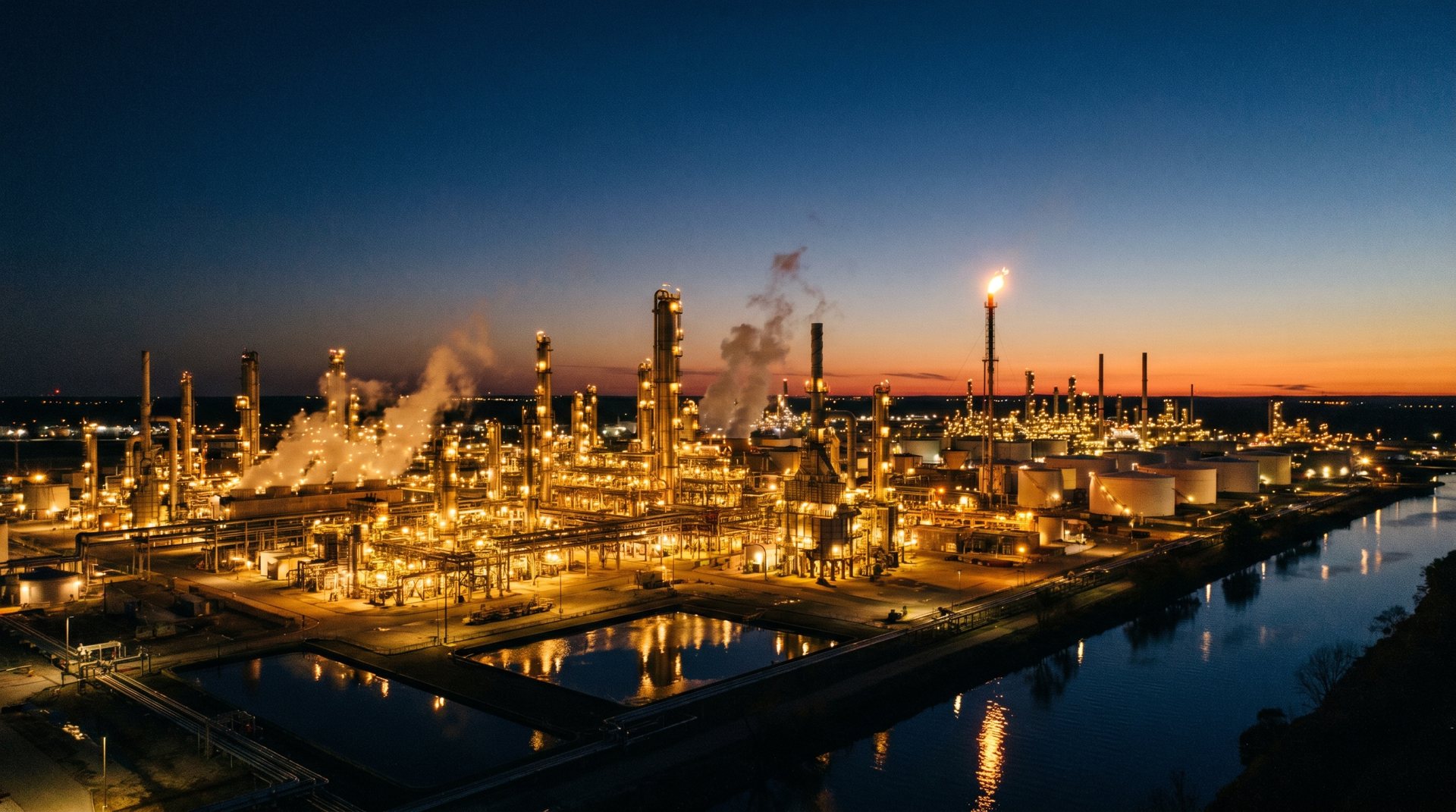
Few commodities show the fragility of a global supply chain as clearly as nitrogen fertilizer. It is made almost entirely from natural gas, shipped through a handful of maritime chokepoints, and produced by a short list of countries that can — and increasingly do — hold volumes back to protect their own farmers. In 2026 all three of those pressure points have tightened at once. Urea futures have climbed to roughly US$684 per tonne, the highest since October 2022 and more than 70% above where the year began, according to market data compiled by Trading Economics. For buyers of nitrogen products and the petrochemicals and chemicals that feed them, the episode is a reminder that price is now driven as much by policy and geography as by fundamentals.
Gas is the price, and the price is volatile
Start with the feedstock. Conventional urea synthesis consumes natural gas as both fuel and raw material — roughly 55% of production input by volume — so the economics of a tonne of urea are effectively a bet on the gas curve. Analysts estimate that a 10% move in gas prices flows through to about a 5% change in production cost. When Middle East tensions pushed regional gas sharply higher through the first half of 2026, ammonia and urea costs followed almost mechanically. Plants in India and Bangladesh compounded the squeeze, cutting runs amid limited LNG availability. The lesson for procurement is that nitrogen exposure is, at root, energy exposure.
A chokepoint problem, not just a plant problem
The second pressure point is geography. The Strait of Hormuz handles about a third of global fertilizer shipments, and Gulf Cooperation Council producers — Saudi Arabia, Qatar and Oman among them — supply roughly a quarter of the world's urea exports. When flows through that corridor are disrupted, the tonnage does not simply reroute; it disappears from the balance for weeks. The World Bank has linked this year's price spike directly to Hormuz disruption, and estimates that Gulf ammonia export capacity of some 4.0–4.2 million tonnes a year depends on the same waterway. For importers far from the Gulf, a shipping event thousands of miles away lands on the invoice.
Export curbs turn a tight market tighter
The third force is policy. Facing higher costs at home, major exporters have moved to keep supply domestic. China has tightened urea export restrictions to secure its own agricultural season, while Russia has curtailed shipments of key nutrients; a Reuters analysis cited by market trackers puts the share of these exports now under some form of restriction at between 50% and 80%. Each curb is individually defensible as national policy, but stacked together they thin the pool of freely traded tonnes and amplify every other shock. The World Bank projects urea prices to rise close to 60% across 2026 before easing in 2027, as Gulf exports recover and gas prices moderate — but it flags the risks as tilted firmly to the upside.
Why the Gulf sits at the centre
Paradoxically, the same region at the heart of the disruption is also the structural answer to it. Proximity to low-cost feedstock gas gives Gulf and wider MENA producers a cost advantage in ammonia and urea that importers in Europe, East Asia and North America cannot replicate at scale, and new capacity increasingly integrates carbon capture to serve buyers who now ask about emissions as well as price. That makes the region a price-setter in export markets across Asia and Africa. For buyers positioned in or trading through the Gulf, the practical edge is access — relationships that reach back to the plant, paired with the quality assurance to verify specification and the supply-chain and logistics strength to move product when the corridor is congested.
What buyers should do now
| Pressure point | Practical response | Where we help |
|---|---|---|
| Gas-driven cost swings | Layer forward cover rather than chasing single spot cargoes | Global Sourcing |
| Hormuz / freight risk | Diversify origin and build schedule buffers into delivery plans | Logistics |
| Export restrictions | Secure supplier relationships in unrestricted origins early | Petrochemicals |
| Specification & quality | Require full certificates of analysis on every nitrogen lot | Quality Assurance |
The through-line is that resilience now beats opportunism. Procurement teams that treat gas exposure, routing risk and trade policy as standing variables — and that hold relationships across more than one origin — will ride out the volatility far more comfortably than those buying on headline price alone. The same discipline applies across the wider industrial products and commodities Arian Holding trades, where energy cost and trade measures are climbing the agenda in metals and polymers too.
Working with Arian Holding
Arian Holding operates on the sourcing side of exactly this kind of dislocation. Our trade desk structures compliant, multi-origin supply of nitrogen and related products — urea, ammonia, sulphur and associated petrochemicals — backed by global sourcing, independent quality assurance and the logistics to deliver on programme through a congested market. As gas, geography and policy keep the nitrogen balance tight, we help buyers convert a moving picture into secure, documented supply. Request a quote and our team will map current options against your specifications.
Sources: Trading Economics and TradingView / Trading Economics News (urea at multi-year high, >70% year-to-date, Hormuz and GCC export share); World Bank Blogs (Hormuz disruption, ~60% 2026 rise, export restrictions); Metals Hub (gas as ~55% of input and cost pass-through); Discovery Alert (Gulf ammonia export capacity via Hormuz). Figures are as reported by these publications around August 2026 and are provided for general information, not as trading or investment advice.