
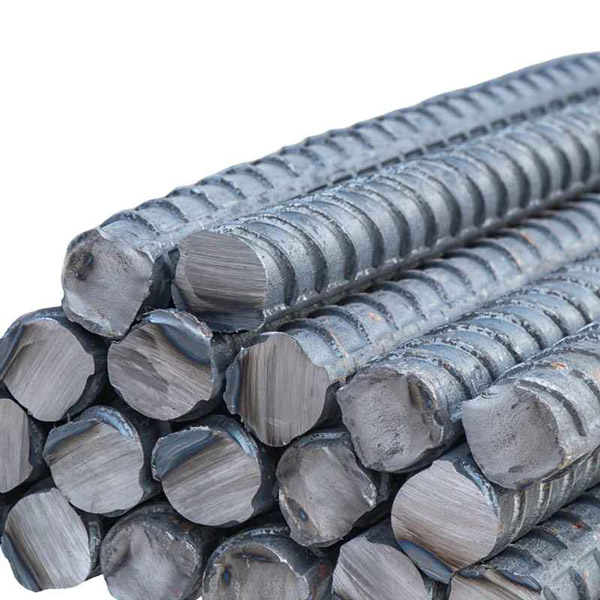
Two bars of reinforcing steel can look identical on a truck, share a diameter, come from the same region, and still be entirely different products. One might be safe to weld into a cage; the other might fail at the joint. One might be approved for a bridge deck; the other might be rejected on arrival. The difference is the grade — and the grade is not a marketing tier or a quality ranking. It is a specification: a promise, backed by a testing regime, about how the steel behaves under load.
The confusion for buyers is that the world uses several grading languages at once. American, British, European, Japanese and Chinese standards all describe steel with numbers, but they count different things. This explainer sets out what each number means, where the systems align, where they quietly diverge, and what to verify before the material leaves the mill.
The short version
Most steel grade numbers encode minimum yield strength — the stress at which the steel stops springing back and starts permanently deforming. ASTM counts in ksi (Grade 60 = 60 ksi). European and British standards count in MPa (S355 = 355 MPa; B500B = 500 MPa). The letters after the number carry the rest of the story: ductility class, impact toughness, weldability. Two grades with similar strength numbers are not automatically interchangeable.
What the number actually measures
Pull on a steel bar and it stretches elastically — release the load and it returns to length. Pull harder and you reach the yield point, where deformation becomes permanent. Keep pulling and you reach tensile strength, the maximum stress before the bar necks and breaks. Structural design works almost entirely off the yield figure, because a building is not designed to approach fracture; it is designed never to deform permanently in the first place.
That is why yield strength is what the grade number names. Under ASTM A615, the standard specification for deformed carbon-steel bars, Grade 60 means a minimum specified yield strength of 60 ksi — roughly 420 MPa — with a minimum tensile strength of 90 ksi, about 620 MPa. Grade 40 means 40 ksi, or approximately 280 MPa. Grade 75, Grade 80 and Grade 100 continue the pattern. The higher grades carry more load per unit of cross-section, which is why Grade 60 dominates bridges, highways and multi-storey structures while Grade 40 persists in lighter work.
A detail that surprises many buyers: within A615, the difference between grades is expressed mainly through mechanical properties, not chemical limits. The standard is comparatively permissive on composition. That has a consequence, and it is the single most important thing in this article.
Weldable rebar is a different specification
Where reinforcement must be welded — splices, prefabricated cages, seismic detailing — the specification written for the job is ASTM A706, a low-alloy bar with a controlled carbon equivalent so that heat-affected zones behave predictably. Substituting A615 because it is cheaper or more readily available is not a commercial optimisation; it is a change to the structural design, and one that only the design engineer can authorise.
The British and European systems handle the same problem differently. BS 4449 specifies grades B500A, B500B and B500C: a 500 MPa characteristic yield, with the trailing letter denoting the ductility class — how much the bar can stretch and how much its strength rises past yield before failure. B500C is the most ductile and is what seismic and high-demand detailing generally calls for. Two bars can both be "500 grade" and still be wrong for each other's job.
Flat products: S235, S355 and the substitution trap
For plate, sections and hot-rolled coil and semi-finished steel, the European reference is EN 10025. The pattern holds: S235 means a minimum yield of 235 MPa, S355 means 355 MPa — both quoted for the thinnest range, at thicknesses up to 16 mm. Yield falls as sections get thicker, which is why a grade is only meaningful alongside a thickness. The suffixes matter too: S235J0 guarantees impact toughness tested at 0 °C, for structures facing moderate cold; JR and J2 designate other test temperatures.
Here the industry has a documented safety problem worth naming. The UK's CROSS safety reporting scheme has published concern over fabricators purchasing S235 cold-rolled hollow sections in place of specified S355 hot-rolled sections, because they are cheaper and easier to source. The two are not variants of one product. Cold rolling induces residual stresses that hot rolling does not, so design properties differ, welding procedures differ, and behaviour under fatigue loading differs materially. CROSS's guidance to buyers is blunt: material grade substitution should not be made without approval from the design engineer, and material certificates should be requested to verify what was actually supplied.
Reading across standards
Cross-reference tables are useful and dangerous in equal measure. They align grades on yield strength, which is the easy variable, and stay silent on the rest. As standards bodies and grade-equivalence tools themselves caution, chemical composition limits, mechanical property requirements, testing conditions and delivery conditions can differ significantly between standards even for nominally equivalent grades. "Equivalent" means "a sensible starting point for a conversation with your engineer" — not "drop-in replacement".
| Grade | Standard | Min yield | What the code tells you | Typical use |
|---|---|---|---|---|
| Grade 40 | ASTM A615 | ~280 MPa (40 ksi) | Carbon-steel deformed bar, lower strength tier | Light reinforcement, non-critical slabs |
| Grade 60 | ASTM A615 | ~420 MPa (60 ksi) | Min tensile ~620 MPa; not intended for welding | Bridges, highways, multi-storey frames |
| Grade 60 | ASTM A706 | ~420 MPa (60 ksi) | Low-alloy, controlled carbon equivalent — weldable | Welded cages, seismic detailing |
| B500B | BS 4449 | 500 MPa | The trailing letter is a ductility class, not a strength | General European/GCC reinforcement |
| B500C | BS 4449 | 500 MPa | Highest ductility class of the three | Seismic and high-demand detailing |
| S235 | EN 10025 | 235 MPa (t ≤ 16 mm) | J0/JR/J2 suffix = impact test temperature | General structural sections and coil |
| S355 | EN 10025 | 355 MPa (t ≤ 16 mm) | More load per section; common in heavier hollow sections | Structural frames, plant, heavy fabrication |
The same logic extends beyond steel. Grade codes in copper and aluminium and melt-index classes in polymers follow the identical principle: a short code standing in for a tested property. And as with steel, the code is only worth what the certificate behind it proves.
The certificate is the grade
A grade painted on a bundle tag is a claim. The mill test certificate is the evidence. Under EN 10204, a 3.1 certificate is issued by the manufacturer's authorised inspection representative — someone independent of the production department — confirming compliance with the order specification, and it is accepted for the majority of projects. A 3.2 certificate adds validation by an independent third-party inspector or the buyer's representative, and tends to appear where contracts, regulators or insurers demand it.
Three practical checks turn a certificate from paperwork into protection. First, match the heat or cast number on the certificate to the tags on the material that actually arrived — this is where substitution is caught. Second, read the reported yield, tensile and elongation values and confirm they sit inside the ordered specification, rather than assuming the header line is the whole story. Third, where material will cross into the EU or GCC, confirm dual-standard compliance up front; retesting on arrival is slow and expensive. Our quality assurance and sourcing teams run these checks before shipment rather than after, and our logistics desk sequences documentation with the cargo so clearance is not held on a missing certificate.
Why this is getting more relevant, not less
Grade discipline matters more as production routes shift. Industry reporting through 2026 describes integrated mills trimming blast-furnace hot-rolled coil output and leaning further into electric-arc-furnace production running on high proportions of ferrous scrap. EAF steel meets the same specifications — that is the point of a specification — but scrap-based routes make residual-element control and certification more consequential, not less. Buyers who verify the certificate rather than the tag are the ones insulated from the difference.
Frequently asked questions
What does Grade 60 rebar mean?
Under ASTM A615, Grade 60 refers to a minimum specified yield strength of 60 ksi — approximately 420 MPa — with a minimum tensile strength of 90 ksi (about 620 MPa). The grade number describes the mechanical performance the bar must meet, not its chemistry or its diameter.
Can ASTM A615 rebar be welded?
ASTM A615 is not intended for welding. Its chemistry is not controlled for weldability, so welded joints in A615 bar may not perform as designed. Where reinforcement must be welded, ASTM A706 low-alloy bar is the specification written for that purpose, with controlled carbon equivalent. Always confirm the requirement with the design engineer.
What is the difference between S235 and S355 steel?
Both are structural steel grades under EN 10025. The number is the minimum yield strength in MPa for the thinnest thickness range — 235 MPa for S235 and 355 MPa for S355 at thicknesses up to 16 mm. S355 carries more load for the same section, which is why heavier hollow sections are more commonly available in S355.
Is BS 4449 B500B the same as ASTM A615 Grade 60?
No. They are broadly comparable in strength — B500B specifies a 500 MPa characteristic yield against 420 MPa for A615 Grade 60 — but the standards differ in ductility classification, testing conditions, bond geometry and delivery requirements. Nominally equivalent grades are not interchangeable without engineering approval.
What should a buyer check on a steel mill certificate?
Confirm the certificate type — EN 10204 3.1 is issued by the manufacturer's authorised inspection representative, independent of the production department, and is accepted for most projects, while 3.2 adds an independent third-party inspector. Check that the heat or cast number on the certificate matches the tags on the delivered material, and that the reported yield, tensile and elongation values fall within the ordered specification.
Working with Arian Holding
Arian Holding supplies long and flat steel, billet and semi-finished product and industrial materials against named international standards, with mill documentation issued to the certificate type your project requires. If you are specifying a grade, reconciling standards across markets, or checking that what was ordered is what arrived — request a quote and our technical desk will work the specification with you.
Disclaimer: This explainer is general information about steel grading systems, not engineering, structural or procurement advice. Grade codes are summarised here for orientation only; always refer to the full text of the relevant standard and confirm suitability with a qualified engineer or metallurgist before specifying, substituting or purchasing material.
Sources: ASTM A615/A615M standard specification · Portland Bolt — ASTM A615 grades and properties · CROSS — Common use of S235 cold rolled steel instead of S355 hot rolled steel · Tata Steel Europe — hot-rolled structural steel, EN 10025 · Projectmaterials — EN 10204 mill test certificates 3.1 vs 3.2 · SteelOnTheNet — steel grade equivalence guidance