
The complex opened the second half of the year on a soft footing everywhere except the sea. Chinese ferrous slid to fresh multi-month lows, base metals eased, urea extended one of the year's sharpest corrections and Asian polymer offers were cut again — yet ocean freight accelerated, with Drewry's headline index jumping 9% in a single week as an early peak season and pre-tariff frontloading tightened capacity. Below is the net move for each group, the week's biggest movers, and what to watch ahead. For grades, specifications and quotations, each section links through to the relevant product catalogue page.
Week at a glance
| Group | Net move | The week in one line | Catalogue |
|---|---|---|---|
| Iron ore & steel | Softer | Shanghai rebar futures fell below CNY 3,060/t — a four-month low; iron ore dipped toward one-year lows near CNY 740/t before a supply-side bounce | Steel Products |
| Copper | Steady | LME three-month held near US$13,350–13,400/t, consolidating below June's peaks as high exchange stocks meet a firm deficit narrative | Non-Ferrous |
| Aluminium & zinc | Softer | Aluminium eased toward US$3,090/t; zinc held a narrow, resilient range | Non-Ferrous |
| Industrial minerals | Steady | Barite, gypsum and aggregates tracking firm GCC construction and infrastructure demand | Minerals |
| Petrochemicals | Lower | Urea near US$362/t, down ~18% m/m; bitumen off ~15% m/m but still above year-ago levels; methanol soft-to-steady | Petrochemicals |
| Polymers (PE/PP/PVC) | Softer | Asian HDPE offers cut ~US$70/t toward US$1,200; PP down ~US$95/t; Indian producers trimmed PE and PP list prices | Polymers |
| Ocean freight | Surging | Drewry's World Container Index rose 9% to about US$4,530/40ft — up ~61% year-on-year — led by the Transpacific and Asia–Europe | Logistics |
The week's biggest movers
Steel & iron ore
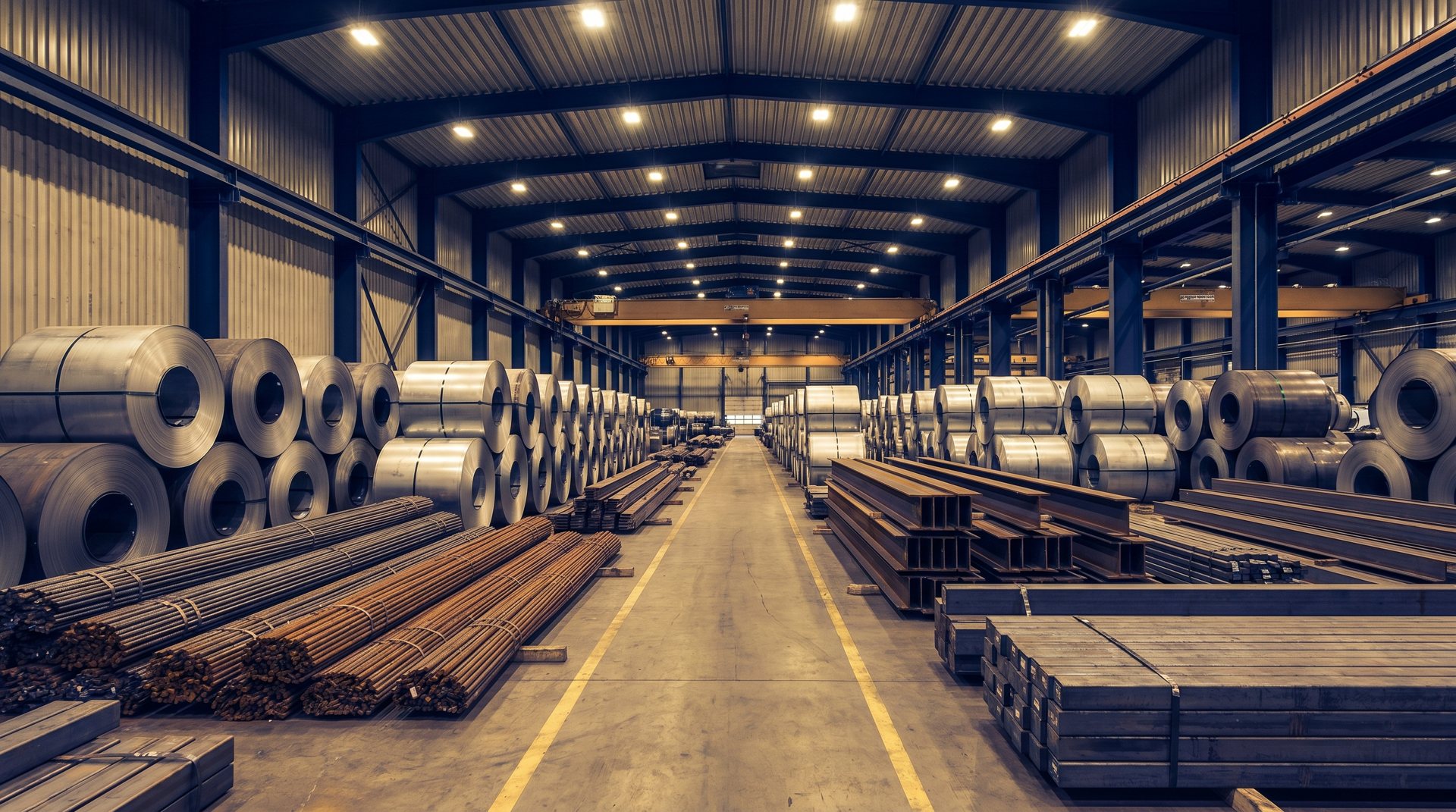
Ferrous led the week lower. Rebar futures in Shanghai dropped below CNY 3,060 per tonne — their weakest in around four months — as steel-mill profitability slipped to roughly 51% of producers, down about 4.8 percentage points on the week and more than 8 points on the year, and seasonal demand cooled further against China's prolonged property downturn. Iron ore was a two-way market: futures first dipped toward CNY 740 per tonne — near one-year lows — as fresh EU steel-import restrictions clouded the demand outlook, then steadied above that level after a Chinese state-backed buyer moved to restrict certain Fortescue cargoes to selected mills, tightening near-term supply. The soft raw-material backdrop keeps finished offers anchored — a constructive window for project buyers to lock forward tonnage. Certified grades and standards are on our Steel Products and Semi-Finished Steel pages, part of our Industrial Products & Commodities sector.
Copper & non-ferrous
Base metals drifted rather than broke. Copper held near US$13,350–13,400 per tonne on the LME three-month, consolidating below the record territory tested earlier in the summer; exchange inventories remain elevated, yet the structural deficit narrative behind electrification and AI-infrastructure demand keeps a floor under sentiment. Aluminium eased toward US$3,090 per tonne, extending its post-peak correction, while zinc proved resilient in a narrow range. Buyers of cathodes, billets, ingots and wire rod should keep budgeting for elevated, range-bound pricing; specifications are on our Non-Ferrous Metals catalogue.
Industrial minerals
Industrial minerals — barite, bentonite, gypsum, aggregates and cement clinker — held steady through the week, underpinned by resilient construction and infrastructure activity across the GCC and wider region. Supply remained reliable through our quarry and partner network, backed by lab certification and the logistics strength described in our Supply Chain & Logistics capability. Browse grades on the Industrial Minerals page, part of our Mining, Minerals & Natural Stone sector.
Petrochemicals
Petrochemical markets stayed on the back foot. Urea traded near US$362 per tonne early in the week, down roughly 18% over the month as prices continued to unwind the spring supply-shock spike — keeping a clear window open for contract buyers to secure forward cover. Bitumen drifted lower — Chinese futures near CNY 3,745 per tonne, off about 15% on the month but still some 4% above year-ago levels — while methanol held soft-to-steady on Asian export demand. Sulphur and base oils rounded out a soft but orderly picture. Available products — urea, sulphur, bitumen grades, base oils and methanol — are listed on our Petrochemicals & Chemicals page.
Plastics & polymers
Polymer markets softened again in Asia. HDPE offers in the region were cut about US$70 per tonne toward US$1,200/t, with LLDPE off around US$80/t and PP grades down as much as US$95/t, as need-to-basis buying held and softer propylene weighed on sentiment. In India, producers including IOCL trimmed list prices — PP down about Rs 12.50/kg, HDPE and LLDPE down roughly Rs 10/kg — though Gulf supply concerns and a weaker rupee limited the downside. With crude and freight both firm, the easing looks tactical rather than structural — a selective replenishment window for converters. View resin and film options on our Plastics & Polymers page.
Freight & trade policy
Logistics was the week's clear standout. Drewry's World Container Index jumped about 9% to roughly US$4,530 per 40ft container — around 61% higher than a year ago — led by the Transpacific and Asia–Europe. Shanghai–New York rose about 11% to near US$7,900/40ft and Shanghai–Los Angeles about 10% to near US$6,350, while Shanghai–Genoa climbed roughly 10% to around US$6,360. Carriers cited an early peak season and shippers frontloading cargo ahead of US tariff changes, with fresh General Rate Increases and Peak Season Surcharges — including a US$3,000/40ft surcharge from one major line effective mid-July. For importers, rising ocean rates feed straight into landed cost, which is exactly what our logistics and global sourcing teams plan around so delivered pricing stays predictable.
Week ahead
Watch three things. First, freight: with General Rate Increases and Peak Season Surcharges landing into mid-July, container rates could extend their climb, so booking shipping windows early remains prudent. Second, Chinese ferrous — with rebar at a four-month low and iron ore whipsawed by EU trade curbs and Chinese supply moves, any policy support or restocking signal out of Beijing would set the near-term tone for steel and raw materials. Third, whether urea's slide finds a floor, which would mark a better entry point for forward fertiliser cover. With freight surging, metals mixed-to-soft, and fertiliser and polymers easing, a selective forward-cover approach — booking freight ahead, timing urea and resin buys to the soft trend, and locking steel cover while raw materials sit low — looks sensible. Arian Holding's global sourcing and quality-assurance teams can structure compliant, multi-grade supply across all of the above. Request a quote and our trade desk will respond with current, firm pricing for your specifications.
Sources: Trading Economics (steel, iron ore, urea, bitumen); London Metal Exchange (copper, aluminium); ChemOrbis and Plastic4trade (polymers); Drewry World Container Index. Figures are indicative market levels for the week to July 5, 2026 and are provided for general information, not as trading advice.