
Summary
The ferrous complex enters Q3 2026 pulled two ways. Upstream, iron ore looks heavy: ample seaborne supply, record Chinese port stocks and a soft property sector keep most analysts forecasting a drift toward the high-US$80s to low-US$90s per tonne by year-end. Downstream, finished steel tells a firmer regional story — Europe's 1 July safeguard overhaul and CBAM are set to lift landed prices, while record scrap costs and tight supply hold a floor under Gulf rebar. Expect cheaper raw material but pricier, more protected finished steel.
This outlook covers the ferrous products Arian Holding trades day to day — long products and rebar, hot-rolled coil and plate, and semi-finished billet and slab — listed on our Steel Products and Semi-Finished Steel catalogues within the Industrial Products & Commodities sector. Figures below are indicative market levels and published forecasts, expressed as ranges and directions rather than firm prices.
Driver 1 — Iron ore: well supplied, capped upside
Iron ore is the soft spot of the complex. The benchmark traded near US$100/t in late June, having rebounded roughly 15% off a mid-June low after Beijing signalled fresh moves to curb industrial overcapacity. Most houses see that bounce as temporary: the consensus points to a 2026 average near US$94/t, the World Bank to about US$97/t, and Goldman Sachs — while lifting its 2026 number to around US$93/t — still expects prices to slide toward US$88/t by Q4. The backdrop is a market biased to surplus: seaborne shipments are running near multi-year highs and Chinese port inventories sit at their richest since 2022, blunting any urgency to chase fresh cargoes.
Driver 2 — China demand: the persistent drag
The decisive demand variable remains China's property sector. Steel consumption fell sharply in 2025 and is forecast to contract a further ~0.6–1% in 2026, with analysts treating the relaxation of property-borrowing limits as unlikely to spark a quick recovery. Even with GDP growth around 4.8%, construction-linked steel use keeps shrinking — which is why softer iron ore, rather than a demand-led rally, is the base case. For buyers outside China, the read-through is a well-supplied upstream that keeps input costs contained into the second half.
Driver 3 — Europe's 1 July reset: safeguards and CBAM
The biggest near-term policy swing factor is European. From 1 July 2026, the EU's new tariff-rate-quota regime roughly halves tariff-free import volumes (to about 18.3 million tonnes a year) and doubles the out-of-quota duty to 50%. It lands alongside the Carbon Border Adjustment Mechanism, which adds an estimated €150–550/t of embedded-carbon cost to many imported grades. Analysts expect EU and UK finished-steel prices to rise — by up to roughly £80/t in the short term and potentially well beyond that later in the year once protection is fully applied. The upshot: a sharper split between cheap raw material and more expensive, more regulated finished steel inside the bloc.
Driver 4 — Scrap and the Gulf: a firmer regional floor
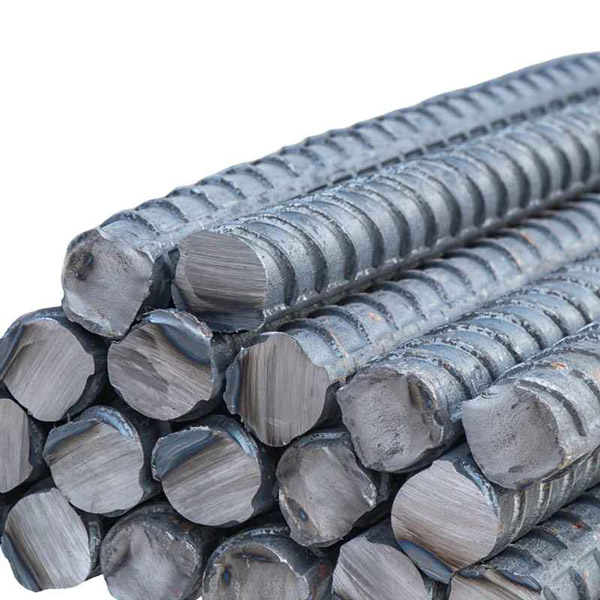
Closer to Arian's core markets, the finished-steel picture is firmer. The Gulf's pipeline of Saudi giga-projects and sustained GCC infrastructure keep rebar demand resilient even as growth moderates, while a regional supply crunch and mills' shift toward scrap-fed electric-arc production have pushed scrap to record highs — Fastmarkets' Saudi HMS 1&2 index reached its highest since the series began. Turkey, the world's largest rebar exporter, remains the swing price-setter, its costs tied to imported US and EU scrap, while competitively priced billet (heard around US$410–420/t FOB from regional suppliers) feeds re-rollers. Net: tighter, dearer long products regionally than the iron-ore weakness alone would suggest.
Scenarios for Q3 2026
Rather than a single point forecast, we frame three plausible paths. Directional ranges only — not price guidance.
| Scenario | Iron ore | Rebar / long products | HRC & flat | What drives it |
|---|---|---|---|---|
| Base | Eases toward high-US$80s–low-US$90s/t | Firm regionally on tight supply | Lifts in EU on safeguards/CBAM | China demand soft, ore surplus; EU protection bites; Gulf projects steady |
| Bull | Holds near US$100/t | Climbs on scrap-cost push | Rises broadly | China stimulus and overcapacity cuts bite; scrap stays at records; restocking |
| Bear | Slips below US$85/t | Softens on weak offtake | Flat-to-lower ex-EU | Property drag deepens, exports flood non-EU markets, scrap retreats |
What this means for buyers
The quarter favours a split strategy. With iron ore well supplied and trending lower, the cost base for semi-finished and mill-direct programmes looks comfortable — a constructive window to lock forward tonnage of billet and slab and certified-grade long and flat products. But buyers exposed to Europe should plan for higher landed costs from 1 July and price CBAM into contracts early, while those sourcing rebar regionally should secure cover against a firm, scrap-driven floor rather than wait for a pullback. Arian Holding's global sourcing network and quality-assurance teams can structure compliant, certified ferrous supply across grades and origins, backed by the supply-chain and logistics reach that keeps material moving through volatile, policy-driven windows.
Ready to fix supply against this outlook? Request a quote and our trade desk will respond with current, firm pricing for your specifications.
Sources: Trading Economics (iron ore); Goldman Sachs via Mining.com; GMK Center (consensus forecast); S&P Global Ratings; Trade Compliance Resource Hub (EU safeguards); Fastmarkets (GCC steel); SteelOrbis; London Metal Exchange. Forecasts and figures are indicative and provided for general information, not as trading or investment advice.