
How Carbon Rules and Tariffs Are
Redrawing Global Steel Trade
A carbon border tax in Europe, doubled tariffs in the United States and another record year of Chinese exports are pulling the steel map in three directions at once — and the carbon footprint of a tonne is becoming as decisive as its price.
For most of the past decade, sourcing steel meant chasing the lowest landed cost. In 2026 that calculus is breaking down. Two of the world's largest import markets have erected very different walls — one priced in carbon, the other in tariffs — while a wall of low-cost Chinese tonnage keeps testing every other border. For buyers, where a tonne is made, and how cleanly, now shapes whether it can be sold at all.
Three forces, one fractured market
The steel trade is being reshaped by three developments that have all sharpened in the first half of 2026:
- Europe's carbon border opened for business. The EU's Carbon Border Adjustment Mechanism (CBAM) entered its definitive period on 1 January 2026, ending the transitional phase. Importers of iron and steel must now account for embedded emissions and surrender CBAM certificates priced off the EU carbon market, with the first declaration due by 30 September 2027 for goods imported during 2026.
- US tariffs doubled, then widened. Section 232 duties on steel and aluminium rose from 25% to 50% in mid-2025, and a fresh proclamation on 1 June 2026 — effective 8 June — further adjusted the regime through to the end of 2027, extending its reach to more derivative products.
- Chinese exports hit a new record. China shipped a record 119 million tonnes of steel in 2025, up around 7.5% year on year and the highest ever, according to customs data reported by Mysteel — a flood that keeps prices soft and trade defences busy worldwide.
Underneath all three sits the same structural fact: the OECD and EUROFER estimate global steelmaking capacity exceeds demand by more than 600 million tonnes a year, with China alone producing over half the world's steel. Tariffs and carbon levies are, in large part, different answers to that single problem.
Carbon becomes a cost line, not a footnote
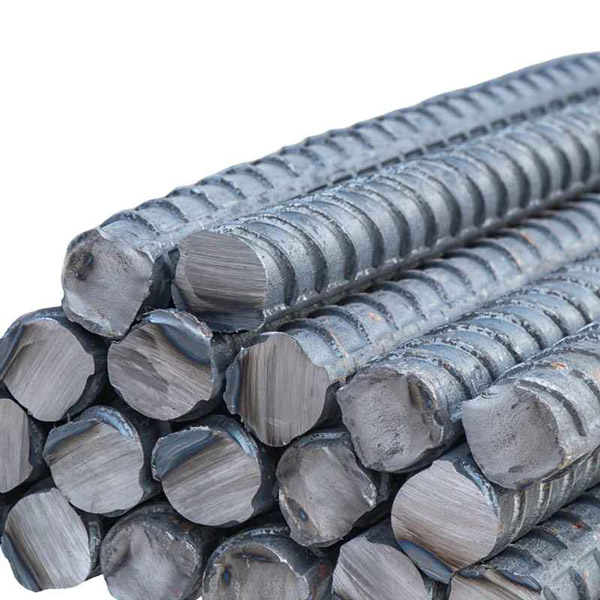
CBAM matters because it changes what buyers are actually paying for. A tonne of rebar, hot-rolled coil or structural steel entering the EU now carries an implicit carbon charge tied to how it was made. Blast-furnace material from high-emissions routes faces the steepest adjustment; cleaner electric-arc and direct-reduced-iron (DRI) production faces far less. For exporters that cannot document and verify their emissions, the compliance burden itself becomes a barrier — disproportionately so for the smaller mills that have long competed on price alone.
The same logic is rippling beyond Europe. Importers everywhere are starting to ask for emissions data, and the ability to supply verified, lower-carbon tonnes is turning into a commercial credential rather than a marketing line. That is reshaping not just finished steel but the semi-finished billet and slab that feeds re-rollers, because embedded emissions travel with the metal down the chain.
The question is shifting from "what does this tonne cost?" to "what does this tonne cost once its carbon and its tariff are priced in?"
The Gulf's quiet advantage
This is where the Middle East's position becomes strategically interesting. Cheap natural gas and abundant renewable power have made the Gulf a natural home for gas-based DRI and electric-arc steelmaking — routes that are structurally cleaner than the coal-fed blast furnaces that still dominate Asia. Industry analysis from GMK Center puts Emirates Steel at roughly 0.67 tonnes of CO₂ per tonne of finished steel on a Scope 1 and 2 basis and Oman's Jindal Sohar near 1.05 tonnes, against a DRI-EAF global average closer to 1.37 tonnes.
In a world where carbon is priced at the border, that gap is no longer just an environmental statistic — it is a cost advantage. Regional producers that can certify lower embedded emissions are better placed to hold and grow share in carbon-sensitive markets, even as commoditised tonnes from higher-emission routes get squeezed. The same dynamic is drawing major green-steel investment globally, with Europe alone targeting some 15–20 million tonnes of hydrogen-capable DRI capacity by 2030, per industry trackers.
What it means for buyers
The practical lesson is that price, tariff exposure and carbon intensity now have to be read together. A cargo that looks cheapest at the quayside can become the most expensive once a border adjustment or a derivative-product tariff lands on it. A more resilient procurement posture blends cost discipline with origin and carbon intelligence:
- Know your carbon story. Track the emissions intensity and production route of your steel, not just the unit price — it increasingly determines market access.
- Diversify origins deliberately. Tariff walls and trade defences move quickly; qualifying suppliers across regions through disciplined global sourcing preserves the freedom to pivot.
- Verify before you ship. As flows shift toward newer producers and routes, independent quality assurance and documentation protect both specification and compliance.
- Plan the route, not just the purchase. Tariff classifications and carbon paperwork add friction at the border, making supply chain and logistics planning part of the price.
None of this sits in isolation. The forces reshaping steel are the same ones reshaping the wider Industrial Products & Commodities landscape, where buyers must now weigh policy, carbon and geopolitics alongside the spot number on the screen.
Working with Arian Holding
Arian Holding sits where these shifts meet: a diversified trading and industrial group with the sourcing reach to access cost- and carbon-advantaged supply, the logistics backbone to route around tariff and carbon friction, and the quality assurance to keep specifications and documentation intact as trade flows change. For mills, fabricators and construction buyers navigating a steel market where carbon and tariffs matter as much as tonnage, that combination turns regulatory complexity into a planning advantage. To discuss grades, volumes and origins for your operation, request a quote and our steel trade desk will respond with current options tailored to your requirements.
Sources: European Commission — Taxation and Customs Union (CBAM definitive period, scope, deadlines); Global Trade & Sanctions Law and ExFreight (Section 232 tariff changes); Mysteel / GACC (China 2025 steel export record); OECD Steel Committee via EUROMETAL and EUROFER (global overcapacity); GMK Center (Gulf DRI carbon intensities); Discovery Alert (hydrogen DRI capacity outlook). Figures are indicative and drawn from the cited publications around mid-June 2026; this article is provided for general information and industry analysis, not as investment, trading or procurement advice.