
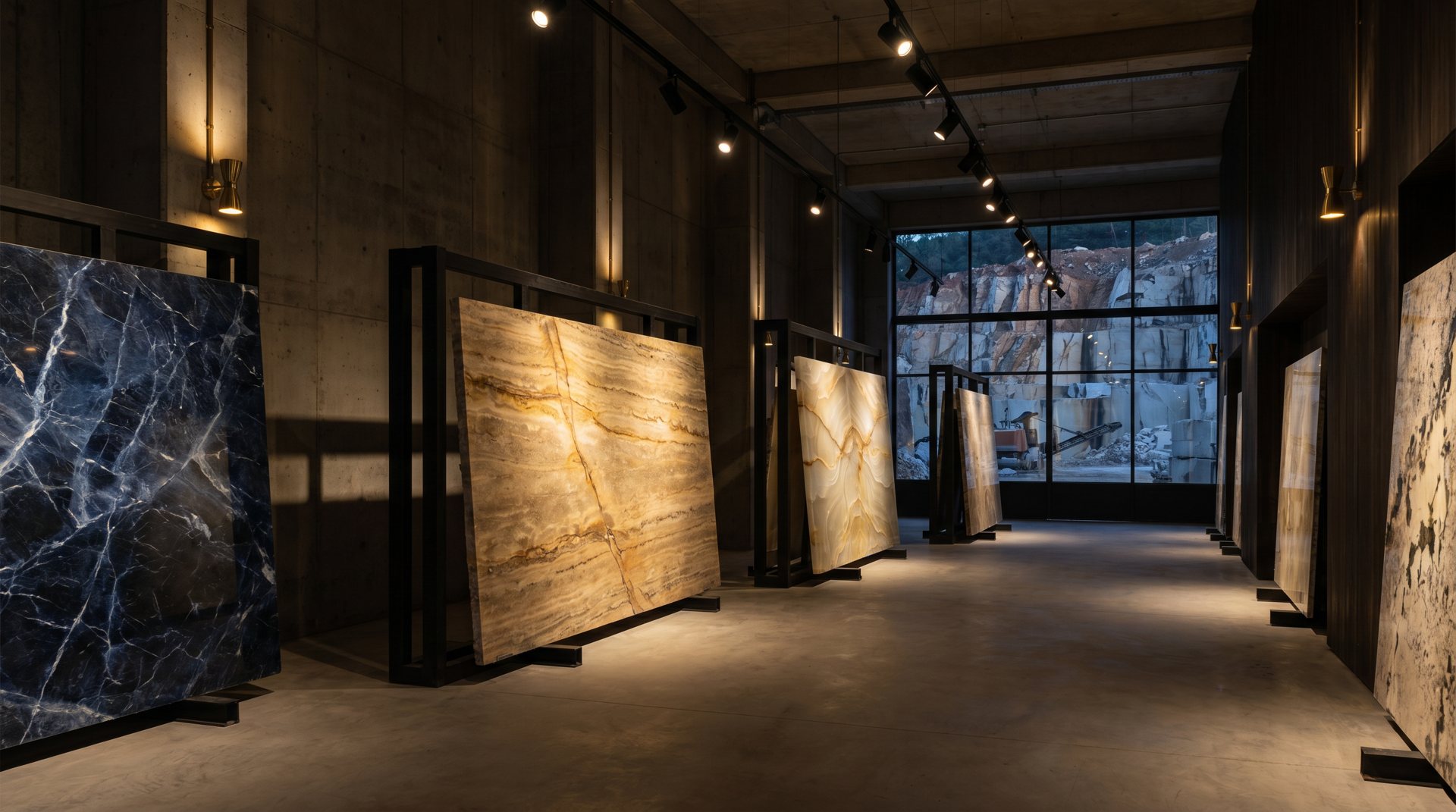
Barite (barium sulfate, BaSO₄) is the dense, chemically inert mineral that does the quiet but critical work of weighting drilling fluids — controlling wellbore pressure and helping prevent blowouts. Roughly 70–80% of global barite goes into drilling muds, with the balance used in medical contrast media and as a functional filler in paints, plastics, rubber and coatings. Because supply is structurally tied to oil and gas activity, choosing the right grade and supplier is as much a risk decision as a price one. This guide walks through what to specify, how to verify it, and how to keep supply secure. Browse available grades on our Industrial Minerals catalogue, part of our Mining, Minerals & Natural Stone sector.
The short version
For most oil-and-gas work you want API 13A barite at 4.2 g/cm³ specific gravity (or 4.1 for non-critical wells), ≥95% BaSO₄, ground so almost nothing exceeds 75 microns. Verify every lot with an independent assay, confirm origin and packaging, and qualify a second source before you need it.
Step 1 — Match the grade to the application
Barite is sold by purity and end use: drilling grade (API 13A / OCMA), chemical grade, and filler grade for paints, plastics and rubber. In coatings and polymer compounds, particle size and brightness matter more than raw density, whereas drilling demands high specific gravity above all. Specifying a tighter grade than the job needs adds cost; specifying a looser one risks mud performance. Map the requirement first, then buy to it.
Step 2 — Understand the API 13A density grades
API Specification 13A defines two density grades of drilling barite: 4.2 g/cm³ and 4.1 g/cm³. Other than density, their test requirements are identical. The 4.2 grade is the long-standing benchmark; the 4.1 grade was sanctioned in 2010 to extend supply as high-quality reserves tightened, and is accepted for some non-critical operations. With cost-efficient 4.2-SG material increasingly hard to secure, many buyers now qualify both and assign grade by well.
Step 3 — Check the specifications that matter
Four parameters decide whether barite will perform: density, purity, particle size and soluble contaminants. The table below summarises typical reference points by grade. Always confirm against the current API 13A edition and your own mud programme.
| Parameter | API 13A 4.2 grade | API 13A 4.1 grade | Filler / chemical grade |
|---|---|---|---|
| Specific gravity | ≥ 4.20 g/cm³ | ≥ 4.10 g/cm³ | Less critical; brightness-led |
| BaSO₄ content | ≥ 95% (typical) | ≥ 95% (typical) | Varies by application |
| Particle size | Max 3% > 75 µm; max 30% < 6 µm | Fine, micronised to spec | |
| Soluble alkaline-earth metals | Limited per API 13A (as soluble Ca) | Application-dependent | |
| Primary use | Demanding / deep wells | Non-critical drilling | Paints, plastics, rubber |
For drilling, the working rule is ≥95% BaSO₄ and a grind such that essentially nothing is coarser than 75 microns — coarse particles settle in the wellbore, while an excess of ultra-fines raises plastic viscosity. Our laboratory teams cross-check these against batch certificates; see how in Quality Assurance.
Step 4 — Verify before you ship
- Request a recent third-party assay or mill certificate covering specific gravity, BaSO₄, soluble alkaline-earth metals and sieve/particle-size data — not just a generic data sheet.
- Confirm conformance to API 13A or OCMA by name and edition, and ask which density grade the lot represents.
- Pin down origin and consistency. China, India, Morocco and Mexico supply most mined barite; ore body and processing route affect lot-to-lot stability.
- Check packaging and moisture. Bulk, big-bag or 50-kg sacks behave differently in humidity; specify moisture limits and sealed packaging for sea freight.
- Use independent pre-shipment inspection at load port for larger contracts, and retain witness samples.
Arian Holding builds these checks into every order through our global sourcing network and certified quality-assurance process, then manages delivery via the freight and warehousing described in Supply Chain & Logistics.
Step 5 — Manage supply and price risk
The barite market is modest in size but supply-sensitive: it was valued near US$1.7 billion in 2026 and is forecast to reach about US$2.1 billion by 2033 (roughly a 3% CAGR). Reference prices in early-to-mid 2026 ran around US$160–165/t in the United States, with regional levels higher — Q1 figures near US$200/MT in China and around US$230/MT in the UAE amid firm drilling demand and moderately tight supply. With US output declining and import reliance rising (despite incremental capacity such as the late-2025 Coyote Mine expansion in Nevada), every additional tonne of drilling activity feeds barite demand. The practical takeaways: qualify at least two sources, hold safety stock for active programmes, and lock forward cover when supply is loose rather than chasing the market when it tightens. Industrial minerals sit alongside our petrochemical and industrial products lines, so multi-material programmes can be consolidated under one trade desk.
Frequently asked questions
What is the difference between 4.2-SG and 4.1-SG API barite?
Both are defined by API Spec 13A and share identical test requirements apart from density. The 4.2 g/cm³ grade is the long-standing benchmark for demanding wells, while the 4.1 g/cm³ grade was sanctioned in 2010 to extend supply for less critical operations. As high-grade reserves tighten, many buyers now qualify both and match grade to well requirements.
What BaSO₄ content should drilling-grade barite have?
For drilling applications the barium sulfate content should generally be at least 95% by mass, with a specific gravity at or above 4.20 g/cm³ for full API 13A 4.2 grade. Lower-purity material is typically directed to filler or chemical-grade uses rather than weighting drilling mud.
What particle size does API 13A require for barite?
API 13A limits the grind so that no more than 3% of particles are larger than 75 microns and no more than 30% are smaller than 6 microns. This range, originally set for 4.2-SG barite and later applied to 4.1-SG material, balances suspension in the mud against abrasion and settling.
Where is most barite mined and how does that affect supply?
China, India, Morocco and Mexico supply the bulk of mined barite, while import-reliant markets such as the United States are sensitive to drilling activity. Because roughly 70 to 80 percent of barite goes into drilling muds, every incremental tonne of oil and gas work translates almost directly into demand, keeping the market supply-sensitive.
What documents should I request from a barite supplier?
Ask for a recent third-party assay or mill certificate covering specific gravity, BaSO₄ content, soluble alkaline-earth metals and particle size, plus API 13A or OCMA conformance, the country of origin, and packaging and moisture details. Independent pre-shipment inspection at load port is good practice for larger contracts.
Sourcing barite with Arian Holding
Arian Holding supplies API 13A and OCMA drilling-grade barite alongside filler grades for industrial use, backed by laboratory certification, multi-origin sourcing and regional logistics across the GCC and beyond. Whether you need a single trial lot or a forward programme, our trade desk can structure compliant, grade-matched supply to your mud specification. Request a quote with your target grade, volume and destination and we will respond with current options.
Sources: API Specification 13A (drilling fluid materials); AADE technical paper on extending API-grade barite; Critical Minerals HQ — Barite; IMARC barite pricing; GMI barite market; US Bureau of Land Management (Coyote Mine, Nov 2025). Specifications are indicative and provided for general information only; always confirm against the current API edition and your own programme — this is not engineering or trading advice.